
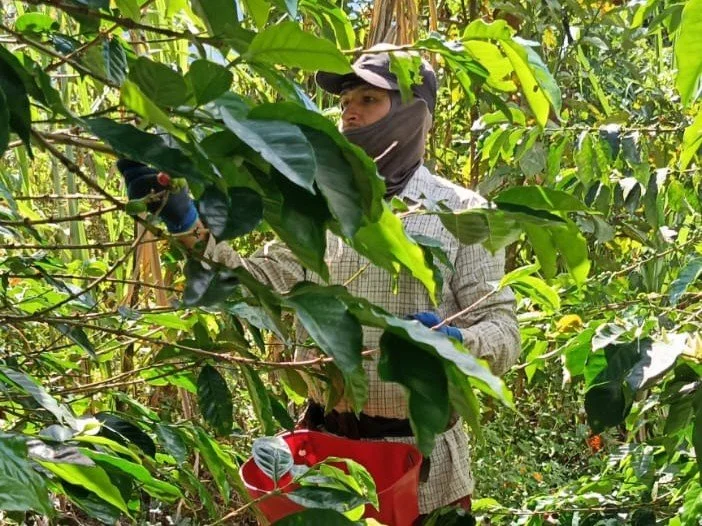
For coffee farmers in Colombia, having insurance is not enough. They need to understand when their coverage applies and what triggers a payout.
Written by Maria Gomez, Climate Venture Lab Lead at Prosper Global Ventures, Julian Calderon, CEO of Innterra, and Sandra Castro, Growth Director at Innterra. This post will be followed by other posts highlighting key insights after the pilot is completed.
Carlos is a coffee farmer in Antioquia, Colombia. He tends his crops every day. And for a while now, he is one of few farmers who has a parametric insurance policy designed to protect his crops from the weather.
The problem: he has no idea how it works.
He sees the rain come too hard and too early. He sees his plants struggle through a dry stretch at the worst moment. He knows the weather is hurting his harvest. But whether his insurance will pay? That is a mystery. The triggers are based on satellite data he has never seen, and the indices are technical and have never been explained in plain language. His policy is, in his words, a black box. He is insured but does not feel protected.
Carlos is not alone. And his experience points to a problem that goes well beyond one farmer in Antioquia.
In Brief
There are over 540,000 coffee-farming families in Colombia who face growing climate risks. Less than 5% have insurance coverage. Parametric insurance was designed to solve this, but a trust gap is limiting its impact.
Innterra partnered with the National Federation of Coffee Growers (FNC) in Colombia and Finagro to design a parametric insurance specifically for coffee growers. Triggers are calibrated to coffee’s phenological calendar. Our pilot sits on top of that foundation and tests a WhatsApp AI layer: a conversational interface that provides early weather alerts, explains triggers in plain language and handles digital identity verification, removing a paperwork bottleneck that has historically delayed payments.
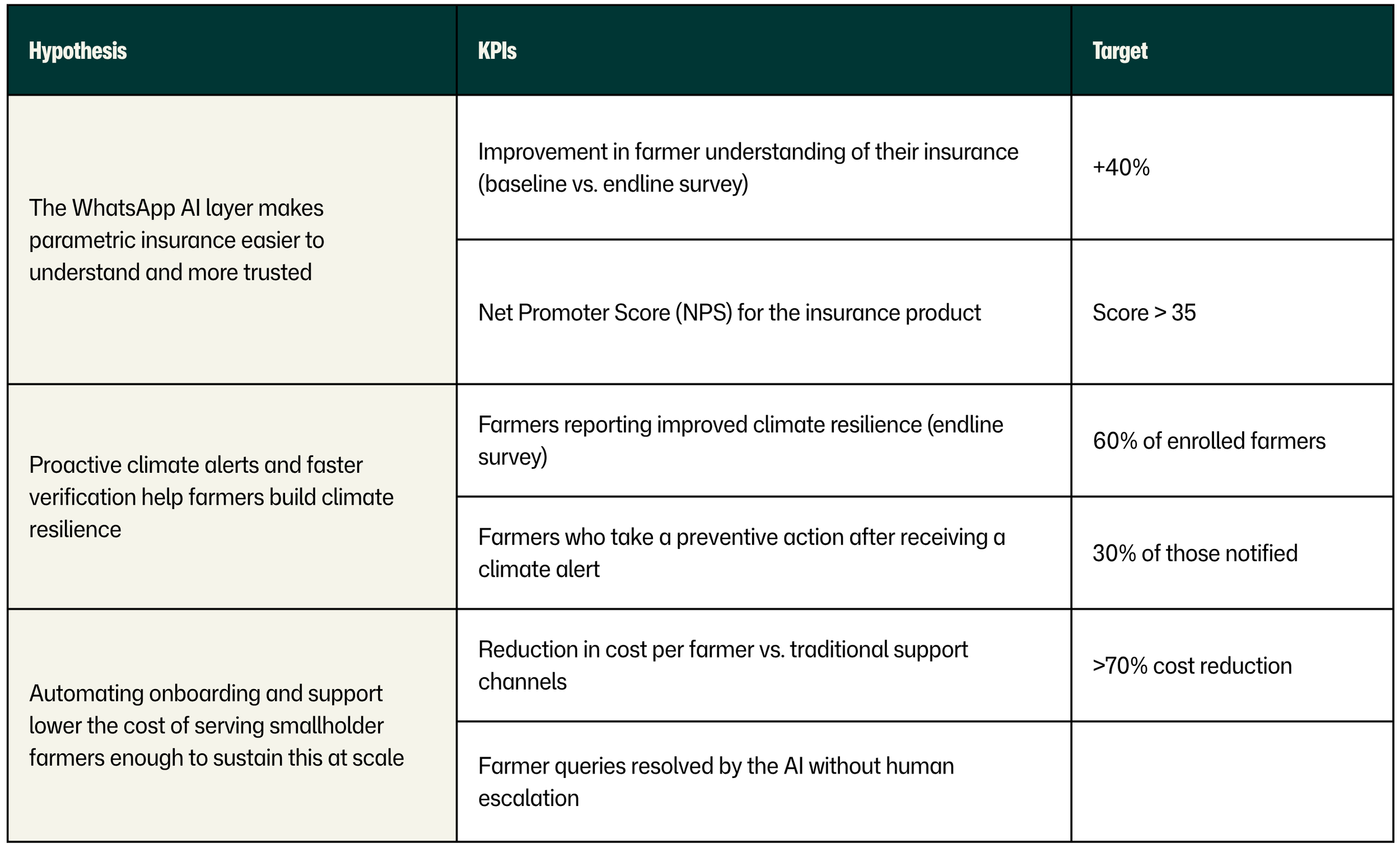
We are testing three things: whether the AI layer increases farmer understanding and trust, whether proactive alerts and faster verification translate into greater climate resilience, and whether automation lowers the cost of serving smallholder farmers enough to make the model sustainable at scale.
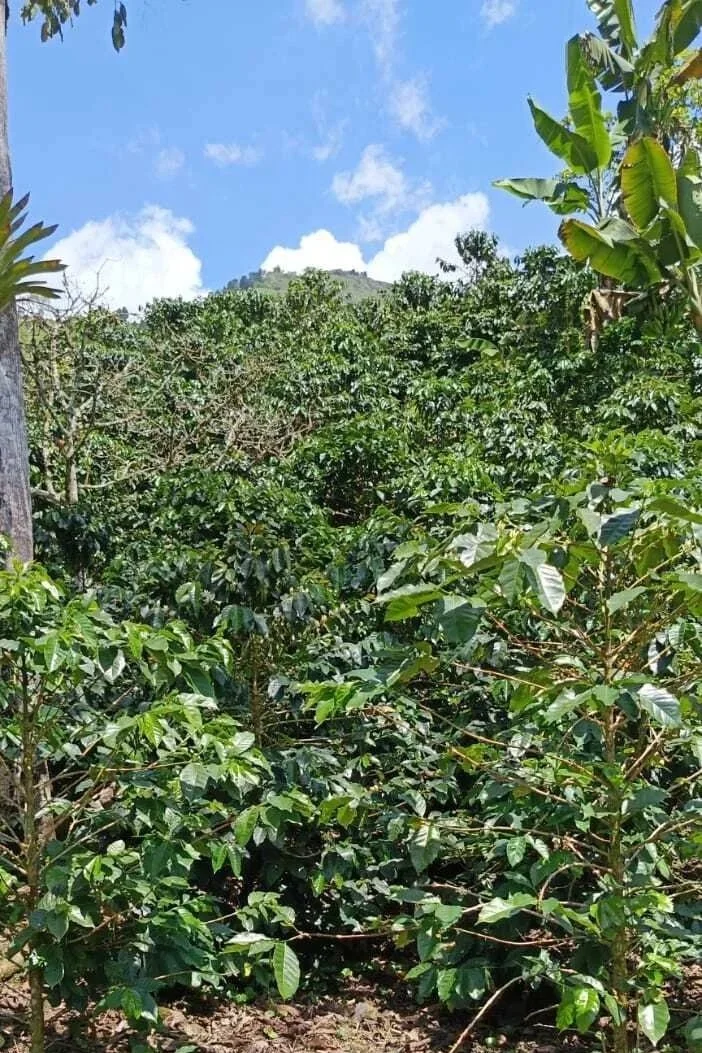
Parametric insurance can trigger automatic payments when predefined weather conditions, such as excessive or insufficient rainfall, are met.
The Problem
Agricultural insurance is notoriously hard to deliver to smallholder farmers. Traditional indemnity insurance requires a claims adjuster to physically verify losses. This is expensive and slow, especially in remote areas. Parametric insurance was designed to solve this problem. Instead of verifying damage, it triggers a payment automatically when a pre-defined weather condition is met: too much rain, too little rain, temperature crossing a threshold. No adjuster needed. Faster payments. Lower costs.
This is a powerful tool for climate resilience. However, it has a trust problem.
The trigger is based on satellite data that the farmer cannot see. They do not know what threshold triggers a payment, whether their specific farm is captured by the index, or if the coverage applies differently at different points in the crop cycle. Many farmers covered by parametric products do not know they hold a policy at all.
And even when a trigger is met, payments in Colombia have typically taken months. One of the reasons is that identity verification and beneficiary registration are still done in person, with physical documents. The paperwork bottleneck erases one of the parametric insurance's main advantages.
The result is a product that is technically innovative but experientially opaque. Farmers are protected on paper, but they do not feel it.
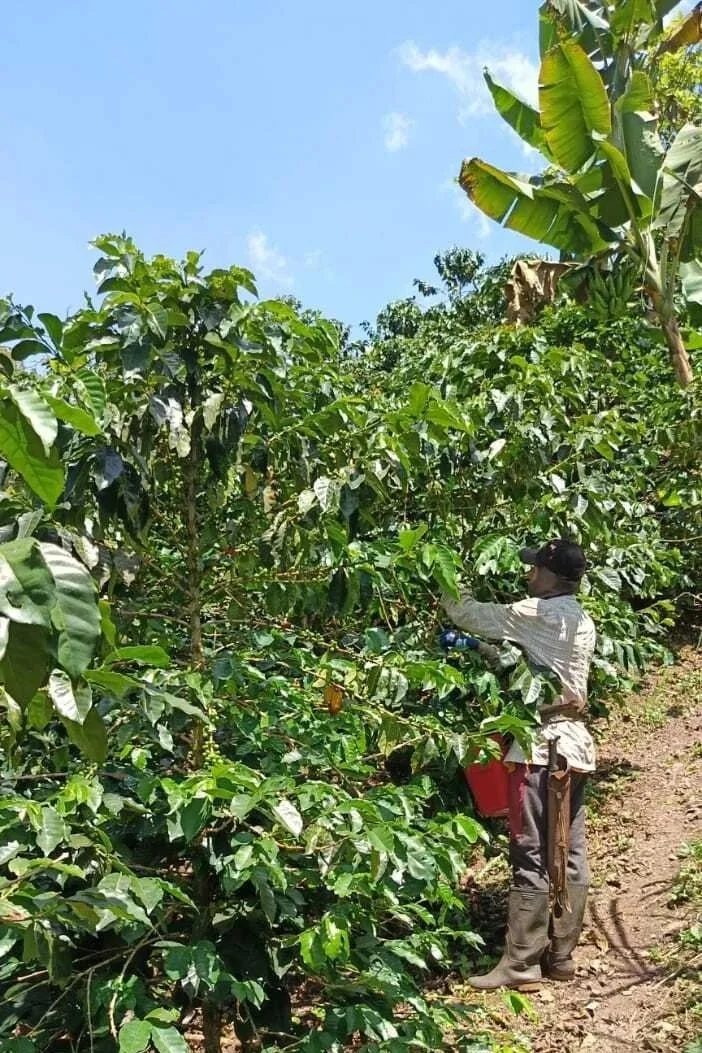
Innterra's insurance triggers are calibrated to the phenological stages of coffee plants, accounting for their changing needs for rainfall and sunlight throughout the growing cycle.
A Better Product for Coffee
Innterra has spent years building infrastructure for parametric insurance in Colombia. Their platform, InnTrack, ingests daily satellite data, evaluates risk triggers for each georeferenced farm parcel, and automates settlement reports to insurers.
But they have also learned from experience that the technology is only as good as the trust farmers place in it. And that trust has been harder to build.
This pilot sits within a broader program with Finagro, a second-level agricultural bank in Colombia, and the FNC, covering 6,500 farmers. That broader program is testing the core design of the insurance itself, including triggers calibrated to coffee's phenological calendar. Our piece of the pilot builds on top of that foundation and tests two product innovations designed to close the trust gap.
Making the black box transparent. Innterra is adding a conversational AI layer delivered through WhatsApp. Farmers like Carlos will receive messages that explain, in plain language, how their insurance works, when their coverage applies, what weather conditions would trigger a payment, and what is happening with the satellite data monitoring their farm. The AI can answer questions. It sends alerts during critical moments in the growing cycle. It turns an opaque index into something a farmer can understand and plan around.
This matters because Innterra’s insurance products are more sophisticated than most. The triggers are calibrated not just to rainfall thresholds, but to the phenological stages of coffee plants; when the plant needs more rain, when it needs more sun, and how excess or deficit at different moments in the cycle affects yields. That specificity is valuable. But it is also harder to explain. The AI layer is built to bridge that gap.
Removing a paperwork bottleneck. The second innovation targets the identity-verification bottleneck. Innterra is testing a digital KYC (Know Your Customer) process done entirely through WhatsApp. Instead of requiring farmers to appear in person with physical documents, identity verification happens through a guided conversation on an app they already use every day. Verification, not the payment itself, is Innterra's part of the chain: once a farmer is verified and a trigger is confirmed, the insurer, Previsora, still issues the actual payout. What this pilot tests is whether digitizing verification removes enough of the delay on Innterra's side to meaningfully speed up the overall process.
These both contribute to the trust problem. Farmers who do not understand their insurance do not trust it. Farmers who wait months for a payment after a verified trigger lose trust too. Both erode the value of a product that, if it works, can be transformative for farmers managing increasingly unpredictable weather.
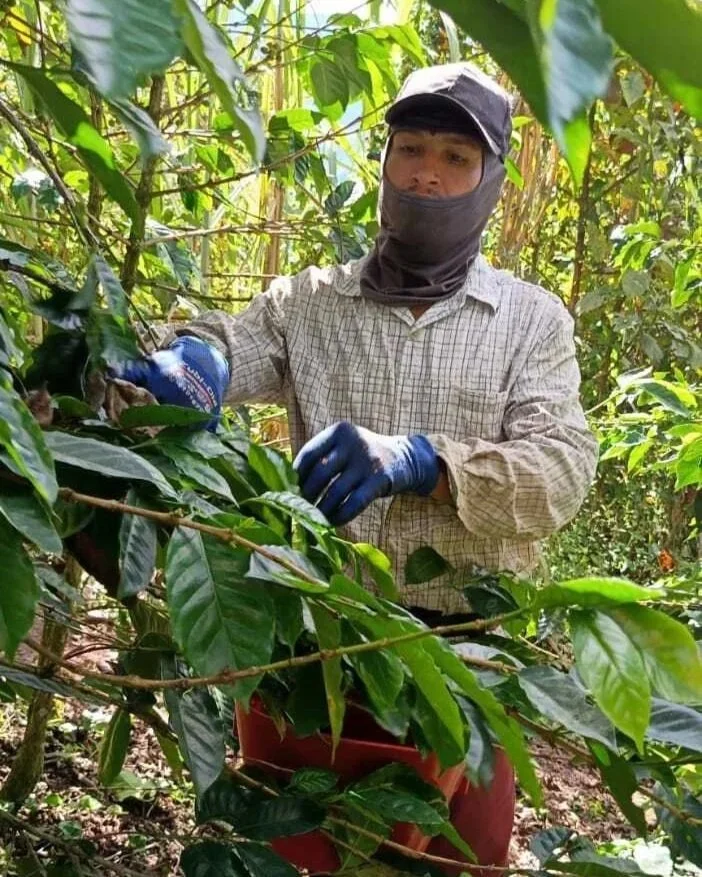
The pilot will test whether WhatsApp-based AI alerts and clearer insurance information help farmers take preventive action and build climate resilience.
What we want to learn
We structured the pilot around three core questions.
The first is understanding. Does the AI layer actually improve farmer comprehension of their insurance product? We are targeting a 40% improvement in farmer understanding between baseline and endline surveys, and we will track AI engagement rates and the kinds of questions farmers ask.
The second is resilience. Do farmers who receive proactive climate alerts and understand their coverage take more preventive action, and does faster verification help them recover sooner after a shock? We want to see at least 30% of farmers who receive an alert report taking a concrete agronomic action in response, and we're tracking how much the digital KYC process shortens the time from a confirmed trigger to a payout file being sent to the insurer.
The third is cost. Can automating onboarding, identity verification, and routine farmer questions lower the cost of serving smallholder farmers enough to make this model commercially viable at scale, without relying on permanent subsidy? We're tracking cost per farmer relative to traditional support channels and the share of farmer queries the AI resolves without human escalation.
Why we backed this pilot
In early 2026, we ran a call for proposals focused on climate resilience in Colombia. 116 teams applied. Nearly half came from the adaptive agriculture and food systems space.
We were looking for three things: technical credibility, a team with genuine roots in the context, and a path to sustainability that does not depend on continuous grant funding. Innterra had all three. Julian, Sandra, and their team have spent years building infrastructure for agricultural insurance in Colombia. They know the regulatory landscape, the institutional players, and what it actually takes to reach a smallholder farmer in a remote municipality of Antioquia.
What pushed us toward this specific pilot is that Innterra is asking a question we think matters deeply: not just whether parametric insurance can exist, but whether it can be designed well enough for farmers to actually trust it. Across our portfolio, we have seen how hard financial products are to sell to smallholder farmers, not because the products do not work, but because trust is hard to build and easy to lose. Getting product design right is as important as getting the technology right. This pilot is a chance to learn what that looks like in practice.
The bigger picture
Colombia has more than 540,000 coffee-farming families. The FNC reaches most of them. If Innterra's product works; if farmers understand it, trust it, and receive payments quickly when weather events strike, the FNC has indicated it is likely to integrate this approach into its broader offering.
That is the real prize. A well-designed parametric insurance product, delivered through a channel farmers already use, calibrated to the specific vulnerabilities of the crop they grow. Not a pilot, but a permanent instrument for climate resilience in one of the most important agricultural sectors in Latin America.
Carlos should know when his insurance will pay. He should understand why. And when a satellite confirms that his plants went through weeks of drought at flowering, his identity should already be verified and his claim ready for the insurer to act on within days, not months. That is what we are trying to prove is possible.
The pilot runs from May through December 2026. We will share what we learn.
For more on Prosper Global Ventures' AI for Climate Resilience work, visit our Climate Venture Lab.