
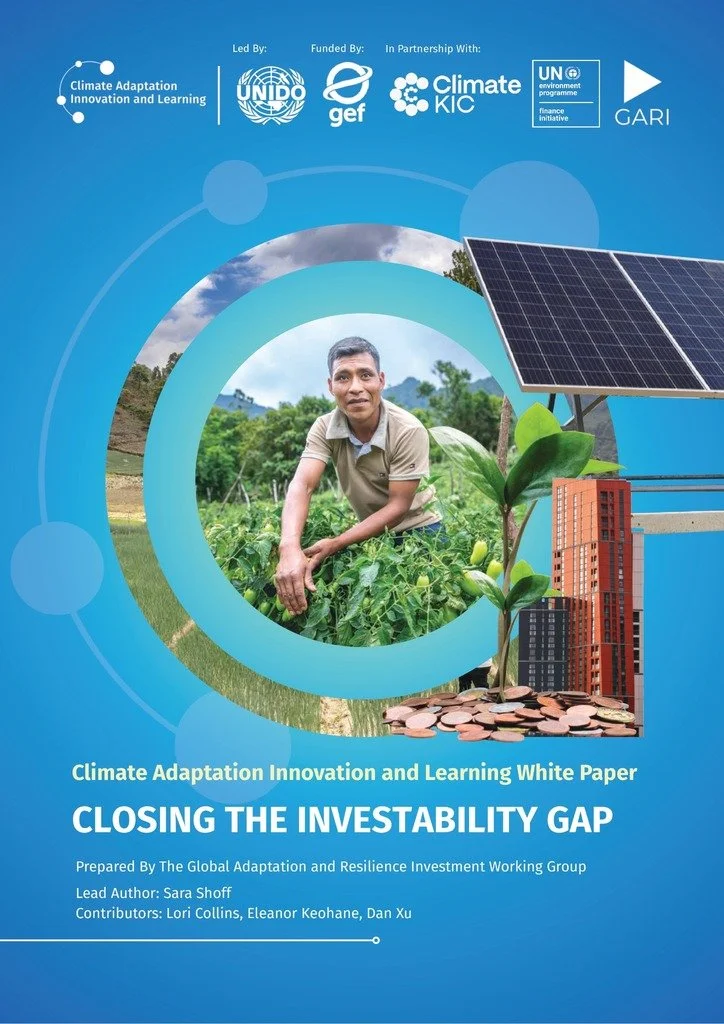
Prosper Global Ventures is featured in a new white paper by the Global Adaptation and Resilience Investment Working Group, sharing insights from its investment approach and a portfolio example.
Climate adaptation is increasingly shaping demand across sectors such as agriculture, financial services, insurance, infrastructure, and technology. Yet the existence of a clear climate need does not automatically translate into an investable opportunity.
Closing the Investability Gap, prepared by the Global Adaptation and Resilience Investment (GARI) Working Group through the Climate Adaptation Innovation and Learning (CAIL) program, examines what prevents existing demand for climate adaptation solutions from attracting investment, particularly in emerging and frontier markets. The initiative was funded by the Global Environment Facility (GEF) and implemented by the United Nations Industrial Development Organization (UNIDO), in partnership with Climate KIC and the United Nations Environment Programme Finance Initiative (UNEP FI).
Drawing on interviews, case studies, and discussions with investment funds and other market participants between 2024 and 2026, the research introduces the concept of an investability gap: the distance between existing climate-shaped demand and an opportunity that is sufficiently developed, appropriately financed, and situated within a market where investment can occur.
Four conditions for investability
Four interrelated conditions need to progress together for an adaptation opportunity to become investable:
Growing demand and a viable commercial proposition. An enterprise needs a credible way to serve customers and translate demand into revenue or another commercially relevant benefit.
An investment-ready enterprise or pipeline. Businesses need the management capacity, operating model, evidence, distribution, governance, and preparation required to absorb capital and execute successfully.
Capital suited to the market, stage, and business model. Financing instruments, ticket sizes, tenor, currency, collateral requirements, and return expectations need to reflect how an opportunity operates and generates cash.
A market context in which investment can occur. Policy, regulation, infrastructure, intermediaries, domestic financial institutions, and broader capital-market conditions all influence whether viable opportunities can receive investment and reach scale.
Progress across these conditions requires more than private investment. Enterprises, fund managers, development institutions, philanthropies, governments, and other market actors each have a role in addressing the constraints that prevent investment.
Prosper Global Ventures: Investing in Early-Stage Climate Solutions
Prosper Global Ventures invests in early-stage companies developing solutions for climate and financial resilience, including in markets where available capital does not yet match their stage, geography, or growth trajectory. Through its investment funds, Venture Platform, and Venture Lab, the organization supports companies with capital, technical assistance, and pilot programs that help de-risk solutions and build evidence for scale.
One example from its portfolio is Pula, a Kenya-based company operating in 22 countries. Pula designs digital crop insurance and bundled advisory services that protect smallholder farmers in emerging markets against weather and yield risks. Using weather indexing and macro data to automate coverage, the company bundles insurance with agricultural inputs such as seeds and fertilizer. Premiums are typically covered by agricultural input companies or institutional partners rather than farmers themselves.
Prosper Global Ventures backed Pula as part of its strategy to fund scalable climate and financial resilience solutions in frontier markets, joining the company’s 2018 Seed round with an investment of USD 150,000. Pula now reaches more than 20 million farmers across 22 countries and closed a USD 20 million Series B in April 2024.
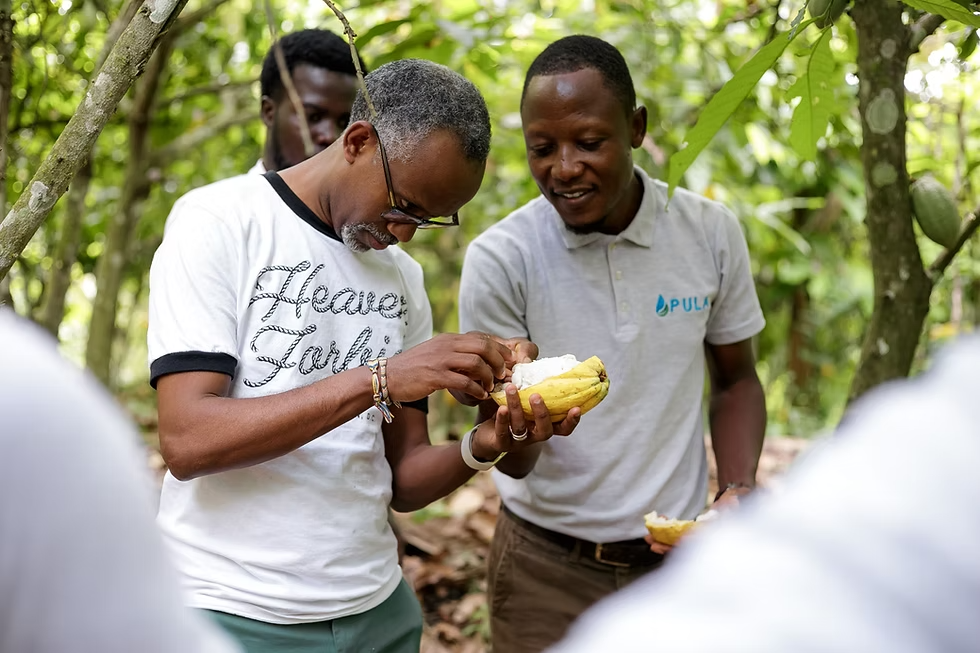
Photo Courtesy of Pula
Moving from Climate Demand to Investment
The experience of companies like Pula illustrates the potential of early-stage investment to support solutions addressing climate-related challenges. But bringing more adaptation solutions to market requires more than capital alone.
The white paper identifies blended finance as an important tool for addressing barriers to investment in emerging and frontier markets. By combining catalytic, concessional, philanthropic, and commercial capital with technical assistance and other forms of support, it can help finance pilots, strengthen enterprises, generate evidence, allocate risks, and connect companies with follow-on capital.
However, blended finance is most effective when it addresses a clearly identified constraint. It cannot create underlying demand or make an unviable business model commercially sound. Its role is to help viable opportunities overcome specific barriers that prevent them from attracting investment.
Ultimately, closing the investability gap requires understanding where those barriers lie, supporting the development of investment-ready enterprises and pipelines, building pathways across different stages of capital, and generating evidence that informs real investment decisions.
Explore the full findings in the white paper: Closing the Investability Gap