
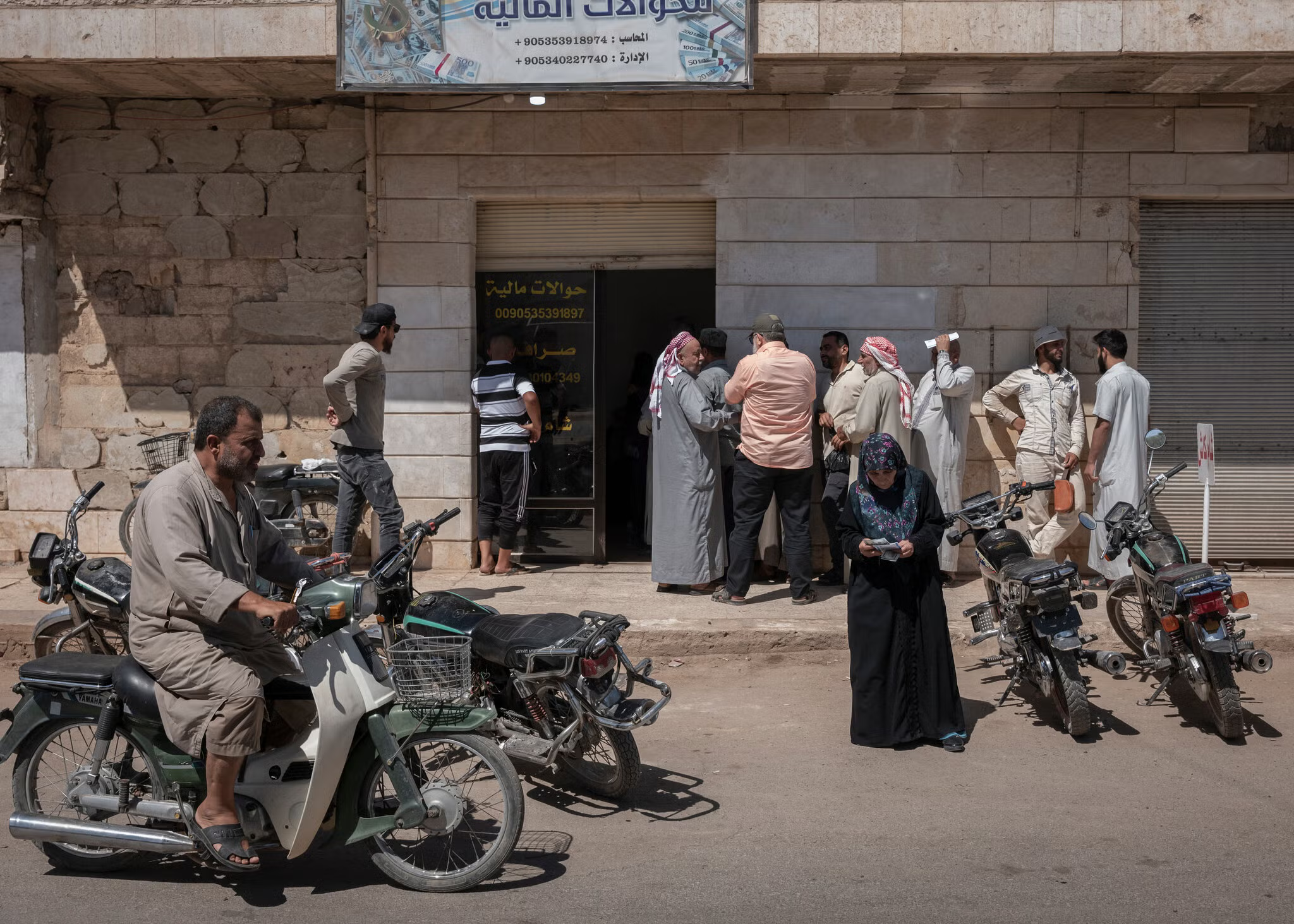
Mercy Corps, the aid group that donated the funds, worked with HesabPay to expand the platform’s reach to Syria.
The New York Times highlights HesabPay, an Afghan digital payments company whose technology was tested in a humanitarian aid pilot supported by Mercy Corps and Mercy Corps Ventures in Northeast Syria.
An innovative approach to delivering humanitarian assistance, tested in Northeast Syria through a collaboration involving Mercy Corps Ventures, is now receiving international attention. HesabPay, the Afghan digital payments company behind the technology used in the initiative, is featured in a recent article by The New York Times.
Published on January 24, 2026, “An Unlikely Source of Crypto Innovation: Afghanistan” explores how HesabPay is using digital payments and blockchain-based technology to facilitate humanitarian assistance, including in countries affected by conflict.
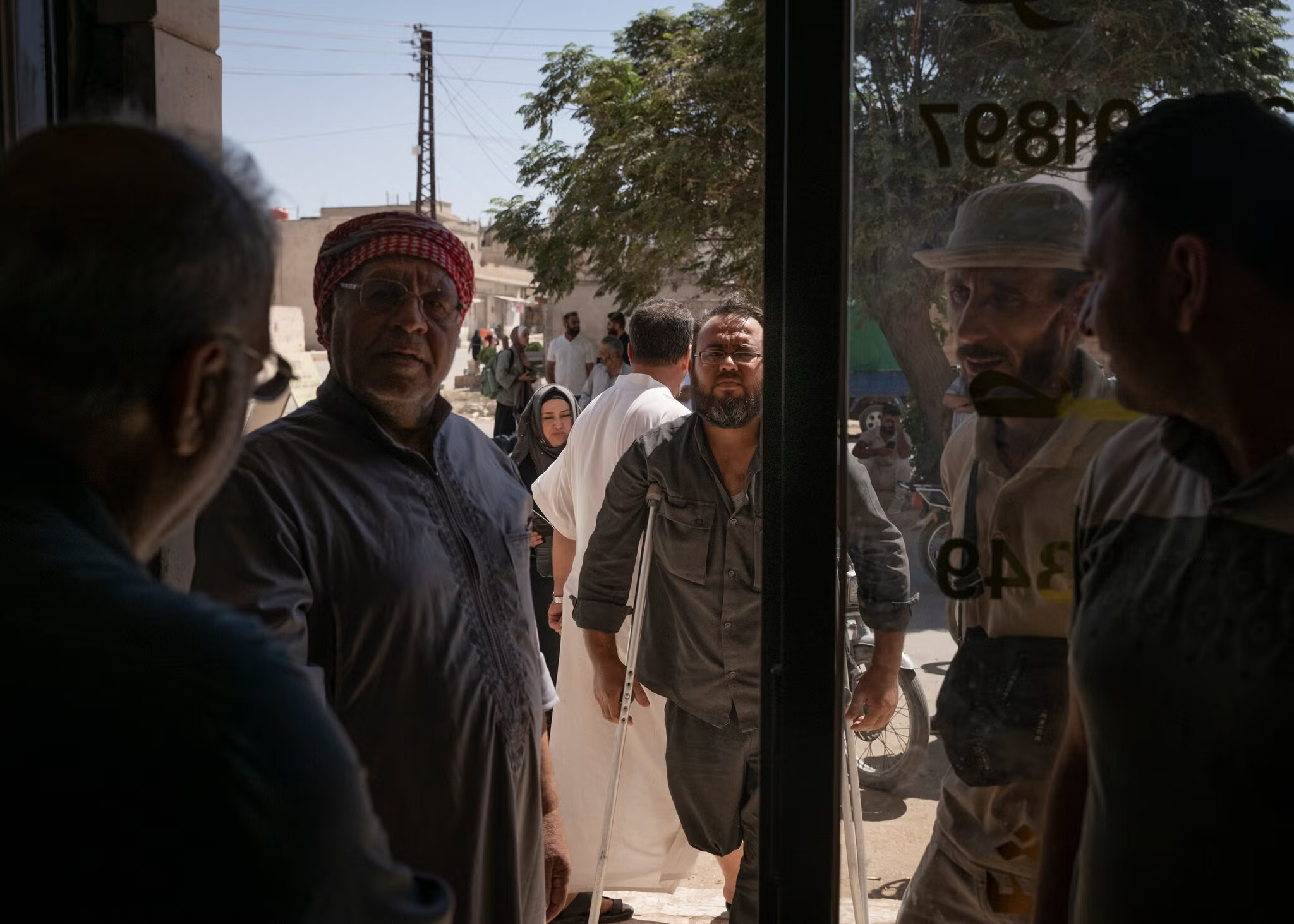
People in Halfaya, Syria, waiting to receive humanitarian aid. The funds were being distributed through HesabPay, a blockchain-based system developed in Afghanistan
A Pilot to Improve Humanitarian Aid Delivery in Syria
In August 2024, Mercy Corps and Mercy Corps Ventures partnered with HesabPay and local organization Pioneers Innovation to test stablecoin-based aid payments in Northeast Syria. The pilot reached 100 smallholder farmers, exploring how digital wallets could help participants receive assistance and purchase agricultural supplies.
The results showed a 96% reduction in payment delivery time, from an average of 28 days to less than one day, and a 60% reduction in distribution costs compared with informal money transfer agents.
The experience demonstrated how digital financial solutions can help address practical barriers to humanitarian aid delivery in fragile settings.
The New York Times feature brings wider attention to HesabPay's work and the potential of digital financial innovation to support communities affected by conflict. It also highlights the relevance of testing these solutions in real-world humanitarian contexts.
Read the feature in The New York Times: An Unlikely Source of Crypto Innovation: Afghanistan
Learn more about the Syria pilot: How Stablecoins Transformed Aid in Syria: 96% Faster, 60% Cheaper